Does My Dog’s Umbilical Hernia Need Surgery?
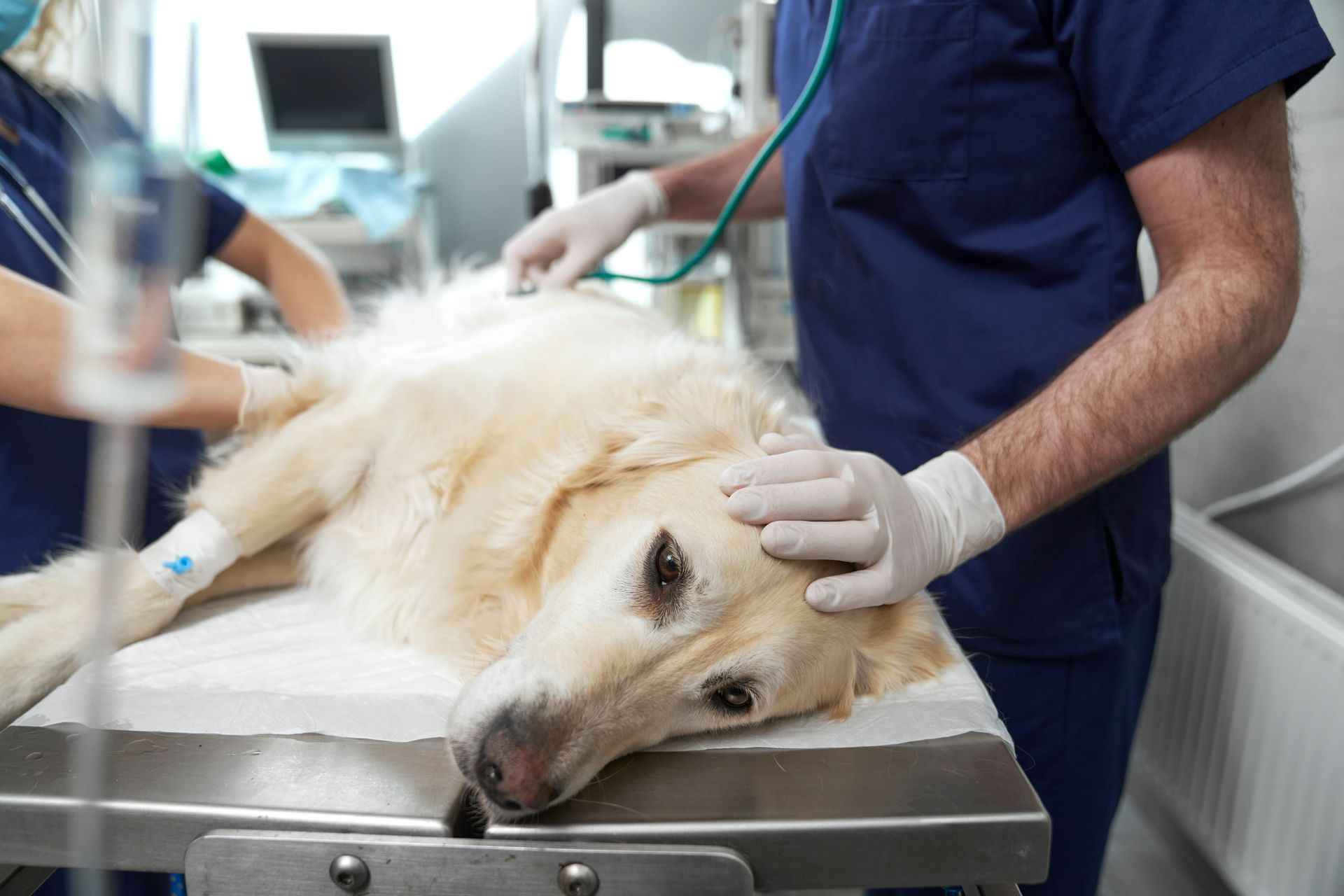
Not every dog umbilical hernia needs immediate surgery. A small, soft, uncomplicated hernia in a young puppy may sometimes close as the puppy grows. A hernia that remains open, becomes larger, feels firm or painful, cannot be gently reduced, or contains trapped abdominal tissue may require surgical repair.
For dog owners in Akron,
Copley Fairlawn Veterinary Clinic can evaluate an umbilical hernia and determine whether monitoring or surgical treatment is appropriate.
What Is an Umbilical Hernia in a Dog?
An umbilical hernia is an opening in the abdominal wall at the belly button, where the umbilical cord was attached before birth.
Normally, this opening closes after a puppy is born. When it does not close completely, abdominal fat or other tissue may push through and create a visible or soft lump beneath the skin.
Many puppy umbilical hernias are noticed during an early wellness examination. They may become more obvious when the puppy stands, plays, cries, or strains.
What Does a Puppy Umbilical Hernia Feel Like?
An uncomplicated hernia often feels like a soft bump in the middle of the abdomen near the belly button.
Some are reducible, meaning the tissue can move back through the opening when gently examined by a veterinarian. Others are non-reducible, meaning tissue remains trapped within the hernia.
Do not repeatedly press or manipulate the lump at home. Your veterinarian can assess its size, contents, and whether it can be reduced safely.
Routine
Wellness Exams provide an opportunity to check an umbilical lump and monitor whether it changes as a puppy grows.
Can a Small Umbilical Hernia Close on Its Own?
Some small uncomplicated hernias in young puppies may close naturally as the abdominal wall develops.
Whether monitoring is appropriate depends on the puppy’s age, the size of the opening, what tissue is inside, and whether the lump remains soft and comfortable.
A veterinarian should still examine the hernia. Owners cannot reliably determine from appearance alone whether only fat is present or whether abdominal tissue could become trapped.
If the opening remains present as the puppy grows, surgical repair may be recommended.
When Is Dog Hernia Surgery Recommended?
Dog hernia surgery is commonly considered when an umbilical hernia does not close naturally, is larger, contains abdominal tissue, or has characteristics that increase the risk of complications.
Repair may also be recommended when a puppy is already scheduled for another planned procedure.
For example, a persistent uncomplicated hernia may sometimes be repaired during a planned spay or neuter. This can allow both procedures to be addressed during the same anesthetic event when the veterinarian determines that approach is appropriate.
Our Spay and Neuter services can be discussed alongside hernia repair when a puppy is approaching a planned procedure.
For puppy owners in
Copley, a wellness or pre-surgical visit is a good time to have a persistent belly-button lump checked before deciding whether it can continue to be monitored.
When Does an Umbilical Hernia Become Urgent?
Most uncomplicated umbilical hernias are not emergencies. The concern changes if abdominal tissue becomes trapped inside the opening.
Contact a veterinarian promptly if the hernia:
- Suddenly becomes larger
- Feels hard, firm, or unusually warm
- Becomes painful when touched
- Changes color
- Can no longer move back toward the abdomen
- Occurs with vomiting or loss of appetite
- Is associated with lethargy or abdominal pain
These signs may indicate incarcerated or strangulated tissue. In that situation, blood flow to trapped tissue can be compromised and urgent surgery may be necessary.
How Does a Vet Evaluate a Dog Umbilical Hernia?
The examination usually begins with gently feeling the lump and the abdominal wall opening.
Your veterinarian will assess the size, location, tenderness, and whether the hernia is reducible. The rest of the abdomen and your dog’s overall health will also be evaluated.
Many uncomplicated hernias can be assessed primarily by physical examination. If the contents are unclear, the hernia is unusually large, or complications are suspected, additional imaging may be considered.
For families with a
dog hernia in Fairlawn, an examination can help distinguish a small uncomplicated defect from one that should be surgically repaired.
What Happens During Hernia Repair Surgery?
During hernia repair, the dog is placed under anesthesia. The surgeon identifies the defect in the abdominal wall, evaluates the tissue within the hernia, returns healthy tissue to the abdomen when appropriate, and closes the opening with sutures.
If trapped tissue has become damaged, additional surgical treatment may be required.
Our Advanced Surgery services include hernia repairs and other soft-tissue procedures for dogs whose conditions require surgical treatment.
Dog owners seeking
dog hernia surgery in Akron can start with an examination to determine whether surgery is necessary and how the procedure should be planned.
What Is Recovery Like After Hernia Surgery?
Recovery focuses on protecting the incision and limiting activity while the abdominal wall heals.
Your dog may need an e-collar to prevent licking. Running, jumping, rough play, and other strenuous activity should be restricted according to the discharge instructions.
Check the incision regularly for increasing redness, swelling, discharge, bleeding, or opening. Call the clinic if your dog seems unusually painful, stops eating, vomits, or damages the incision.
Frequently Asked Questions
Does every puppy umbilical hernia need surgery?
No. Some small uncomplicated hernias may close as a puppy grows. Persistent, larger, or complicated hernias may require repair.
Can my dog live with an umbilical hernia?
Some dogs with small uncomplicated hernias may be monitored. A veterinarian should assess the defect to determine whether leaving it unrepaired is appropriate.
Can a hernia be repaired during spay or neuter surgery?
Yes, in some dogs a persistent uncomplicated umbilical hernia can be repaired during a planned spay or neuter procedure.
How do I know if my dog’s hernia is an emergency?
A hernia that becomes painful, firm, enlarged, discolored, or associated with vomiting, lethargy, or abdominal pain requires prompt evaluation.
What happens during dog hernia repair?
The surgeon returns appropriate tissue to the abdomen and closes the opening in the abdominal wall. The exact procedure depends on the hernia and tissue involved.
Schedule an Umbilical Hernia Evaluation
If your puppy or adult dog has a lump near the belly button, an examination can determine whether monitoring or surgical repair is appropriate.
Call Copley Fairlawn Veterinary Clinic at (234) 400-PETS to schedule an evaluation.
We provide wellness evaluation, spay and neuter care, and advanced surgical treatment for dogs in Akron, Fairlawn, and Copley.

Introducing Vello
A Better Way to Stay Connected

Scan the QR code or use the portal login link below to get started.
SHARE THIS