My Cat Swallowed String: What Should I Do Right Now?
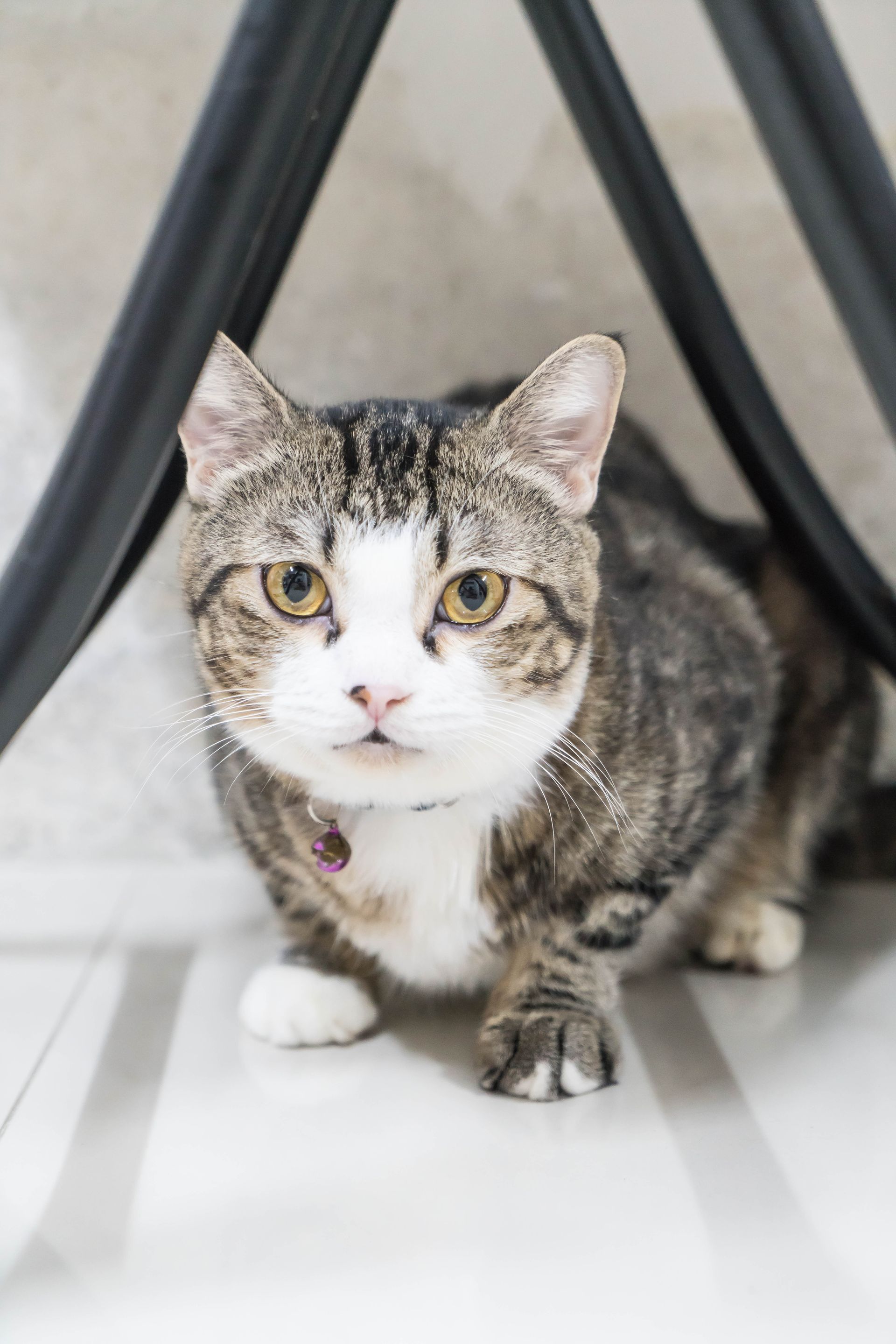
A new cat head tilt should be evaluated promptly. Tilting the head to one side can happen when a problem affects the inner ear, balance system, nerves, or brain. Some causes improve with treatment, while others require more urgent investigation.
A cat with a head tilt may also stumble, fall, walk in circles, appear nauseated, or develop rapid side-to-side eye movements. Even if your cat remains alert, these signs can make it difficult to walk, eat, drink, or use the litter box safely.
For families in Akron, Fairlawn, and Copley,
Copley Fairlawn Veterinary Clinic can examine sudden balance changes and determine whether an ear evaluation, diagnostic testing, imaging, or urgent treatment may be needed.
What to Do If Your Cat Ate String
Call your veterinarian as soon as you know or strongly suspect your cat swallowed string.
Remove any remaining ribbon, yarn, thread, or similar material from the area so your cat cannot swallow more. Keep your cat indoors and quiet while you wait for instructions.
Try to determine what was swallowed, how much may be missing, and when it happened. Bring a matching piece, packaging, or photo to the appointment if available.
Do not induce vomiting or give oil, laxatives, hairball remedies, bread, or a large meal unless a veterinarian specifically tells you to do so.
Never Pull Visible String
If string is hanging from your cat’s mouth or anus, do not pull it.
The other end may be anchored under the tongue, in the stomach, or inside the intestines. Pulling can tighten the material against delicate tissue and cause internal injury.
Prevent your cat from chewing or tugging at the string if you can do so safely. Do not force the mouth open or attempt to remove material wrapped under the tongue.
Call for urgent veterinary guidance instead.
Why String Is Dangerous for Cats
Cats are naturally attracted to long, moving objects, but string cannot be digested normally.
If one section becomes fixed while the intestines continue moving, the bowel may gather into folds around the material. This can lead to obstruction, pressure damage, reduced blood flow, or tearing of the intestinal wall.
A cat may seem normal shortly after swallowing string, so the absence of symptoms does not mean the danger has passed.
Signs of a String Obstruction
Symptoms may begin hours later or develop gradually.
Warning signs include:
- Vomiting or repeated attempts to vomit
- Refusing food
- Drooling, gagging, or repeated swallowing
- Hiding or unusual quietness
- Abdominal pain
- Diarrhea or reduced stool production
- Straining in the litter box
- Weakness or dehydration
- A swollen or tense abdomen
- String visible from the mouth or anus
Passing stool does not completely rule out a partial obstruction.
When String Ingestion Is an Emergency
Known or suspected string ingestion should be treated as urgent because early evaluation may provide more treatment options.
Immediate care is especially important if your cat is vomiting, refusing food, drooling, painful, weak, hiding, or unable to pass normal stool.
Our Urgent Veterinary Care services support prompt evaluation when a cat may have swallowed string or developed an intestinal blockage.
If your cat has pale gums, collapse, severe weakness, breathing difficulty, or a painful swollen abdomen, seek veterinary help immediately.
What the Veterinary Exam May Include
Your veterinarian will ask what your cat swallowed, when it happened, and whether appetite, vomiting, or litter box changes have developed.
The exam may include checking hydration, gum color, temperature, abdominal comfort, and the mouth. The veterinarian may carefully look under the tongue because string can become anchored there.
Bloodwork may be recommended to evaluate dehydration, electrolyte changes, infection, or the effects of vomiting and poor appetite.
Abdominal imaging is often the next step.
How Digital X-Rays Help
String itself may not appear clearly on an X-ray. However, X-rays can reveal abnormal gas patterns, gathered intestinal loops, stomach changes, or other signs of obstruction.
Our Digital X-Rays services help evaluate the abdomen and determine whether further imaging, monitoring, or treatment may be needed.
Repeat imaging may sometimes be recommended, but monitoring should occur only under veterinary direction.
When Ultrasound Is Recommended
Ultrasound may provide more information when string is difficult to identify on X-rays. It can show abnormal intestinal movement, bunched bowel loops, fluid, inflammation, or the location of a suspected foreign body.
Our Ultrasound and Echocardiogram services include abdominal ultrasound that can support evaluation of suspected string obstruction.
Your veterinarian may recommend X-rays, ultrasound, or both based on the examination and symptoms.
Monitoring, Removal, or Surgery
Treatment depends on where the string is located and whether it has caused obstruction or tissue damage.
If the material remains in the stomach and can be reached safely, endoscopic removal may sometimes be considered. In selected cases, closely supervised monitoring may be appropriate.
Surgery may be required if the string is lodged, the intestines are bunched, tissue is damaged, symptoms are worsening, or the material cannot be removed safely another way.
Our
Advanced Surgery services support treatment planning when an abdominal foreign body requires surgical removal or intestinal repair.
Frequently Asked Questions
Can a cat pass string naturally?
Some material may pass, but there is no safe way to predict that at home. String can become anchored and damage the intestines, so veterinary guidance is recommended immediately.
What should I do if string is hanging from my cat’s mouth?
Do not pull it. Keep your cat from chewing it if possible and call a veterinarian immediately.
What if string is coming from my cat’s anus?
Do not pull it. The material may still be attached or trapped inside the digestive tract.
Can an X-ray show swallowed string?
String may not be clearly visible, but X-rays can show intestinal changes suggesting obstruction. Ultrasound may provide additional information.
When is surgery needed?
Surgery may be needed if the string is lodged, causing intestinal bunching, damaging tissue, or creating an obstruction that cannot be resolved safely another way.
Call Immediately After String Ingestion
If your cat swallowed string, thread, yarn, ribbon, or dental floss, do not wait for vomiting or appetite loss to begin.
Call Copley Fairlawn Veterinary Clinic at (234) 400-PETS for urgent guidance and evaluation.
We provide urgent assessment, digital X-rays, abdominal ultrasound, and advanced surgical support for cats in Akron and serve families from Fairlawn and Copley.
Prompt evaluation can help locate the string and reduce the risk of serious intestinal injury.



Introducing Vello
A Better Way to Stay Connected

Scan the QR code or use the portal login link below to get started.
SHARE THIS